


Cleaning kitchen extractor hoods in hotels
Published on
3 min read
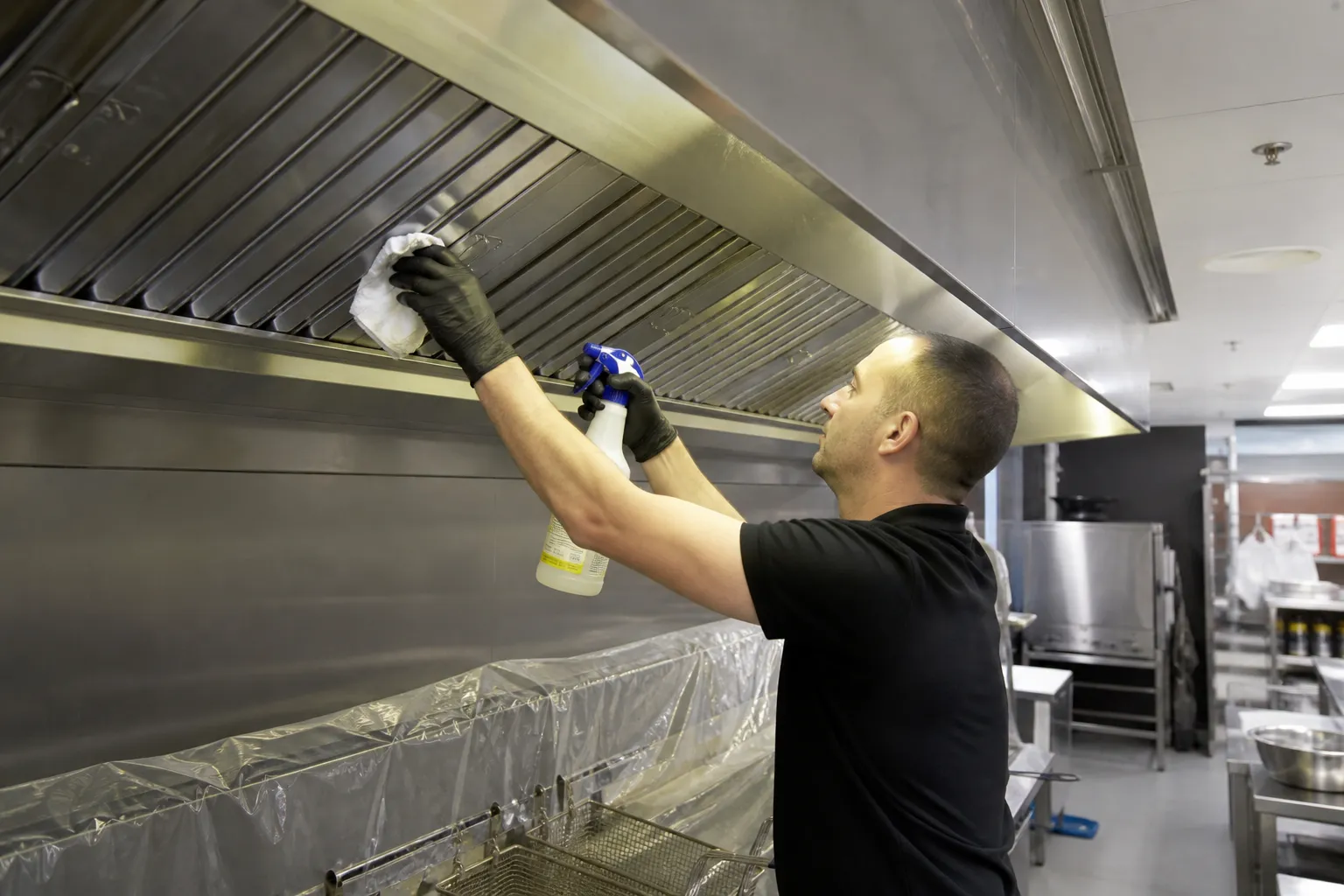
A hotel kitchen’s extractor hood is not a cosmetic detail: it accumulates vaporised grease that, if not removed regularly, becomes a real fire risk and a source of bad odours that spread well beyond the kitchen. It is one of the areas where professional cleaning ties most directly into precise regulatory obligations.
This article explains how cleaning a hotel kitchen’s extractor hood is organised, how often, and what the relevant regulations require.
Contents
- Why kitchen hoods are a special case
- What fire safety regulations require
- Filters: the part that needs the most attention
- The extraction duct: the hidden part
- Recommended frequency based on cooking volume
- Who should handle it: in-house or specialist
- Documentation and liability
Why kitchen hoods are a special case
Unlike most surfaces in a hotel, a kitchen extractor hood accumulates a particular residue: grease vaporised during cooking, which settles on filters, the internal walls of the duct and the extraction motor’s surfaces. If left to build up, this grease is highly flammable and is one of the main ignition points for fires in professional kitchens. For this reason, cleaning a hood is not comparable to normal surface cleaning: it requires specific skills and equipment.
What fire safety regulations require
Professional kitchens, including those in hotels, are subject to fire safety regulations requiring periodic, documented cleaning of extraction systems, with particular attention to smoke exhaust ducts. The minimum frequency varies with the kitchen’s activity volume, but the common feature is the obligation to keep written records of the work carried out, often requested during inspections or insurance claims.
Filters: the part that needs the most attention
Hood filters are the first point where grease accumulates and need cleaning more often than the rest of the system: weekly in high-volume kitchens, less often in smaller or less-used ones. Filter cleaning usually involves soaking in a hot degreasing solution, followed by rinsing and complete drying before refitting. Clogged filters reduce extraction efficiency, with a direct impact on kitchen air quality.
The extraction duct: the hidden part
The internal duct carrying smoke from the hood to the outside is the hardest part to check visually, but also where grease builds up most insidiously, since it is out of daily sight. Cleaning the duct requires specific equipment and trained staff, and should be scheduled less often than the filters but still regularly, typically every six or twelve months depending on how intensively the kitchen is used.
Recommended frequency based on cooking volume
The optimal cleaning frequency depends on the kitchen’s cooking volume: a kitchen serving only breakfast has very different needs from one running an à la carte restaurant, banqueting and events. A well-calibrated cleaning plan distinguishes between these scenarios, avoiding both insufficient intervention (with the risk of dangerous build-up) and overly frequent work that adds no real value.
Who should handle it: in-house or specialist
Cleaning the simpler filters can fall to kitchen staff or the in-house cleaning department, if properly trained. Cleaning extraction ducts, on the other hand, almost always requires a specialist supplier, equipped for duct access and with specific expertise in applicable fire safety regulations. Assigning this task to untrained staff exposes the property to significant risk, both for safety and for regulatory compliance.
Our cleaning service for hotels includes coordinating with specialists for kitchen extraction system maintenance.
Documentation and liability
Every cleaning intervention on extraction systems should be documented with date, type of work and the person responsible, kept alongside the property’s HACCP and fire safety documentation. This documentation becomes essential during a fire brigade inspection or an insurance claim after an incident, when proving regular maintenance can make the difference between accepted and disputed cover.
If you manage a hotel kitchen and want to set up a compliant cleaning plan for your extraction systems, get in touch for an assessment.