


Hotel air duct sanitisation: when to do it
Published on
3 min read
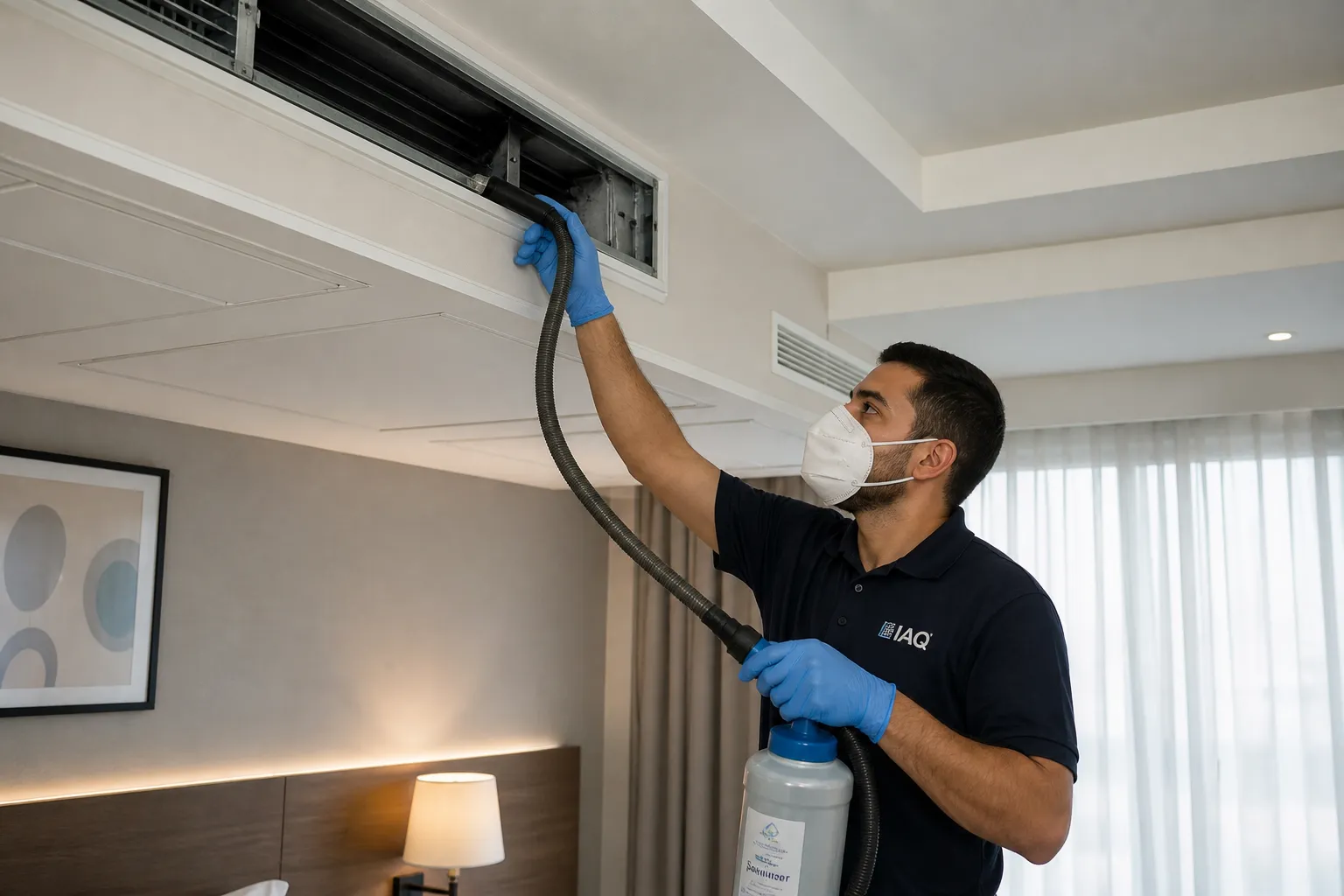
The air circulating through a hotel almost always passes through ducts that, if not sanitised periodically, become a reservoir for dust, mould and sometimes microorganisms. This is an aspect of cleaning guests never see directly, but that affects perceived environment quality, often more than people realise.
This article explains when a hotel’s air ducts need sanitising and which signs indicate it is time to act.
Contents
- Why air ducts get dirty
- Signs that action is needed
- Recommended sanitisation frequency
- What a sanitisation job includes
- The impact on indoor air quality
- Filter cleaning vs. duct sanitisation
- Who should handle it
Why air ducts get dirty
Ventilation and air conditioning ducts carry constantly moving air, which deposits dust, particulate matter and moisture on the internal walls of the channels. Over time, this build-up becomes a favourable environment for mould and bacteria growth, especially in the more humid sections near cooling units. A hotel with a steady flow of guests, and therefore intensive use of its systems, accumulates this residue faster than a residential building.
Signs that action is needed
Several signs indicate ducts need sanitising: a musty or stale smell noticeable when the system switches on, visible dust build-up around ventilation grilles, an increase in reports of allergies or respiratory irritation from guests or staff, or simply the time elapsed since the last documented intervention. Ignoring these signs for a long time progressively worsens air quality throughout the property.
Recommended sanitisation frequency
There is no universal frequency that fits every hotel: it depends on the type of system, intensity of use and geographic area (areas with more pollen or environmental dust need more frequent intervention). As a general guide, checking ducts at least annually, with a full sanitisation every two to three years, is a good starting point for most hospitality properties.
What a sanitisation job includes
A complete sanitisation job involves inspecting the ducts (often using endoscopic cameras for sections not directly accessible), mechanically removing dust deposits, treating internal surfaces with sanitising products specific to air handling systems, and a final check on outgoing air quality. This is not a simple spray treatment, but a technical job requiring physical access to the ducts.
The impact on indoor air quality
Indoor air quality directly affects guest comfort, even if it is rarely mentioned explicitly in a review. A room with stale air or a faint musty smell communicates a sense of neglect that, in the guest’s perception, adds to the visible cleanliness of surfaces. Taking care of this aspect, even though it is invisible, contributes to the overall sense of a well-maintained property.
Filter cleaning vs. duct sanitisation
It is important to distinguish between two interventions often confused with each other: cleaning or replacing filters, which should happen frequently (monthly or quarterly depending on the system), and sanitising the ducts themselves, a deeper and less frequent job. A complete maintenance plan covers both, on separate schedules: neglecting filters still speeds up duct fouling, regardless of how often the ducts themselves are sanitised.
Who should handle it
Duct sanitisation requires specific technical skills and dedicated equipment, so it should be entrusted to a supplier specialised in air handling systems, distinct from the property’s general cleaning supplier. Good coordination between the two matters, though: whoever manages the property’s day-to-day cleaning is often the first to notice the signs (smells, dust) that indicate a specialist intervention is needed.
Our cleaning service for hotels includes monitoring for these signs and coordinating with specialists for system sanitisation when needed.
If you have noticed signs of poor air quality at your property, get in touch for an initial assessment.