


Hotel carpet cleaning: professional techniques
Published on
3 min read
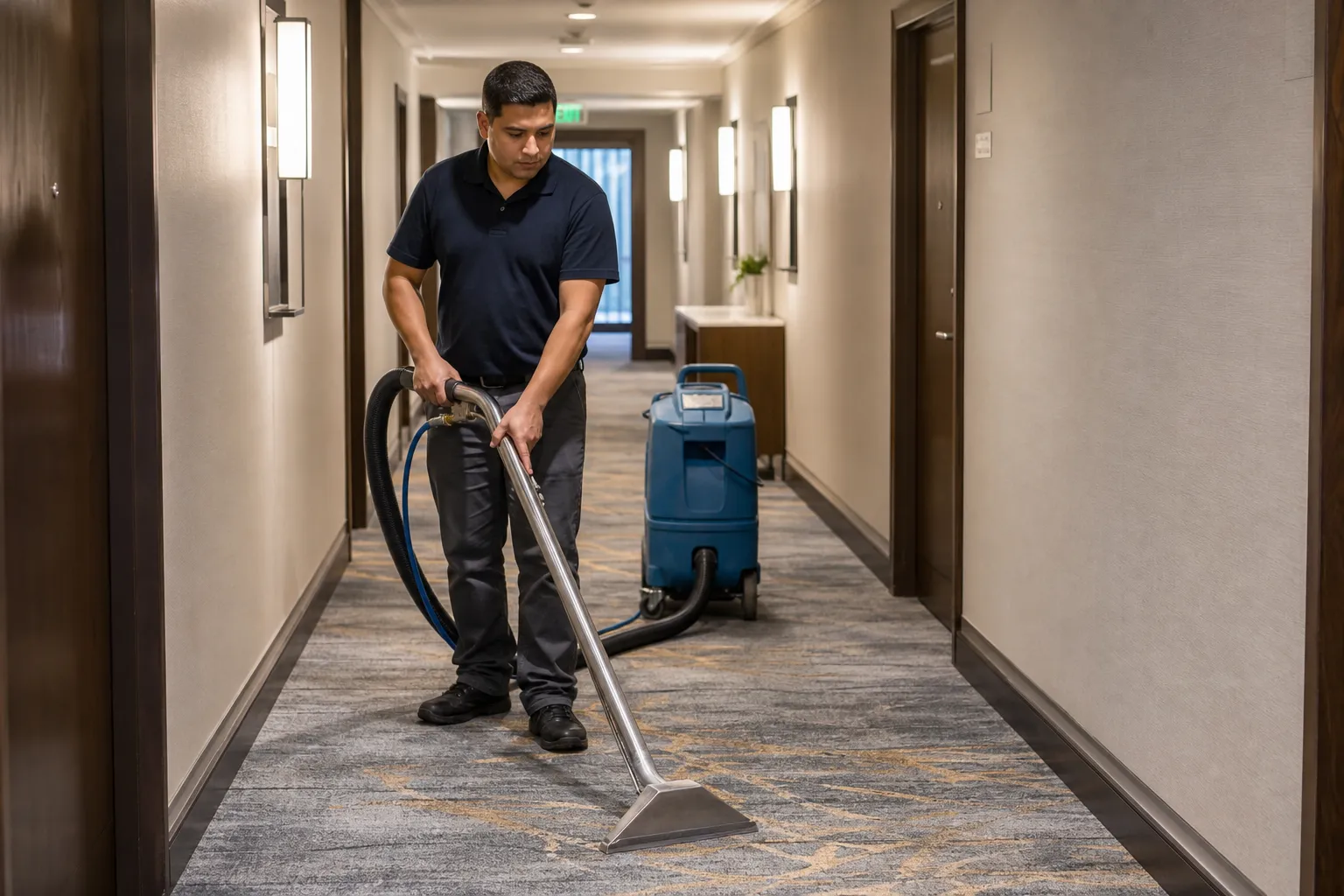
Carpet remains the most common flooring choice in many hotel rooms and corridors, valued for the acoustic and thermal comfort it offers compared with a hard floor. It has one clear drawback compared with other flooring types, though: it traps dirt, dust and odours deep within it, and needs specific cleaning techniques to stay in good condition over time.
This article describes the main professional techniques for cleaning carpet in a hospitality setting.
Contents
- Why carpet needs a different approach
- Daily vacuuming: the foundation of everything
- Hot water extraction cleaning
- Dry cleaning: when to prefer it
- Treating stains on carpet
- Recommended frequency for different areas
- Signs it’s time to act
Why carpet needs a different approach
Unlike a hard floor, where dirt mostly stays on the surface, carpet traps dust, mites and fine particles deep down, between the fibres and the backing. Surface cleaning only removes the most visible part of the dirt, while the finer component, often invisible to the naked eye, builds up over time and can contribute to persistent odours and a decline in room air quality.
Daily vacuuming: the foundation of everything
Daily vacuuming with a professional vacuum fitted with an appropriate filter is the foundation of any carpet maintenance plan. Slow, repeated passes over the same spot remove far more dirt than a quick, superficial pass: well-trained teams spend more time on the highest-traffic points, where dirt concentrates the most.
Hot water extraction cleaning
Hot water extraction is the most widely used professional technique for deep carpet cleaning: a machine injects hot water mixed with detergent into the fibres and immediately extracts it along with the dissolved dirt. This technique effectively removes deep-seated dirt, but requires several hours of drying time, something to plan carefully in rooms or common areas so the surface is not left damp during use.
Dry cleaning: when to prefer it
Dry cleaning, which uses an absorbent compound spread over the carpet and then removed by vacuuming, is preferable when long drying times cannot be planned for, for example in high-traffic common areas that cannot stay closed for hours. The result is generally less deep than hot water extraction, but it allows the area to be back in use almost immediately after the work.
Treating stains on carpet
Stains on carpet should be treated as soon as possible, by blotting to absorb the liquid without rubbing, which risks pushing the stain deeper into the fibres. Each type of stain (wine, coffee, greasy products) needs a specific treatment: using the same product for every type of stain often makes the result worse rather than better.
Recommended frequency for different areas
High-traffic areas, such as corridors and the lobby, benefit from hot water extraction every three to four months, while rooms, with lighter traffic, can go six to twelve months, aside from spot treatment for specific stains. A well-calibrated maintenance plan distinguishes between these frequencies instead of applying a single schedule to the whole property.
Signs it’s time to act
A few signs indicate it is time to schedule a deep clean: a colour that looks dull even after vacuuming, a persistent odour despite daily cleaning, or areas visibly darker at the highest-traffic points. Acting promptly on these signs extends the carpet’s life and slows down visible wear.
Our common area cleaning service includes periodic maintenance of textile flooring across our entire coverage area.
If you want to schedule a professional carpet cleaning job for your property, get in touch for an assessment.