


Hotel curtain sanitising: methods and frequency
Published on
3 min read
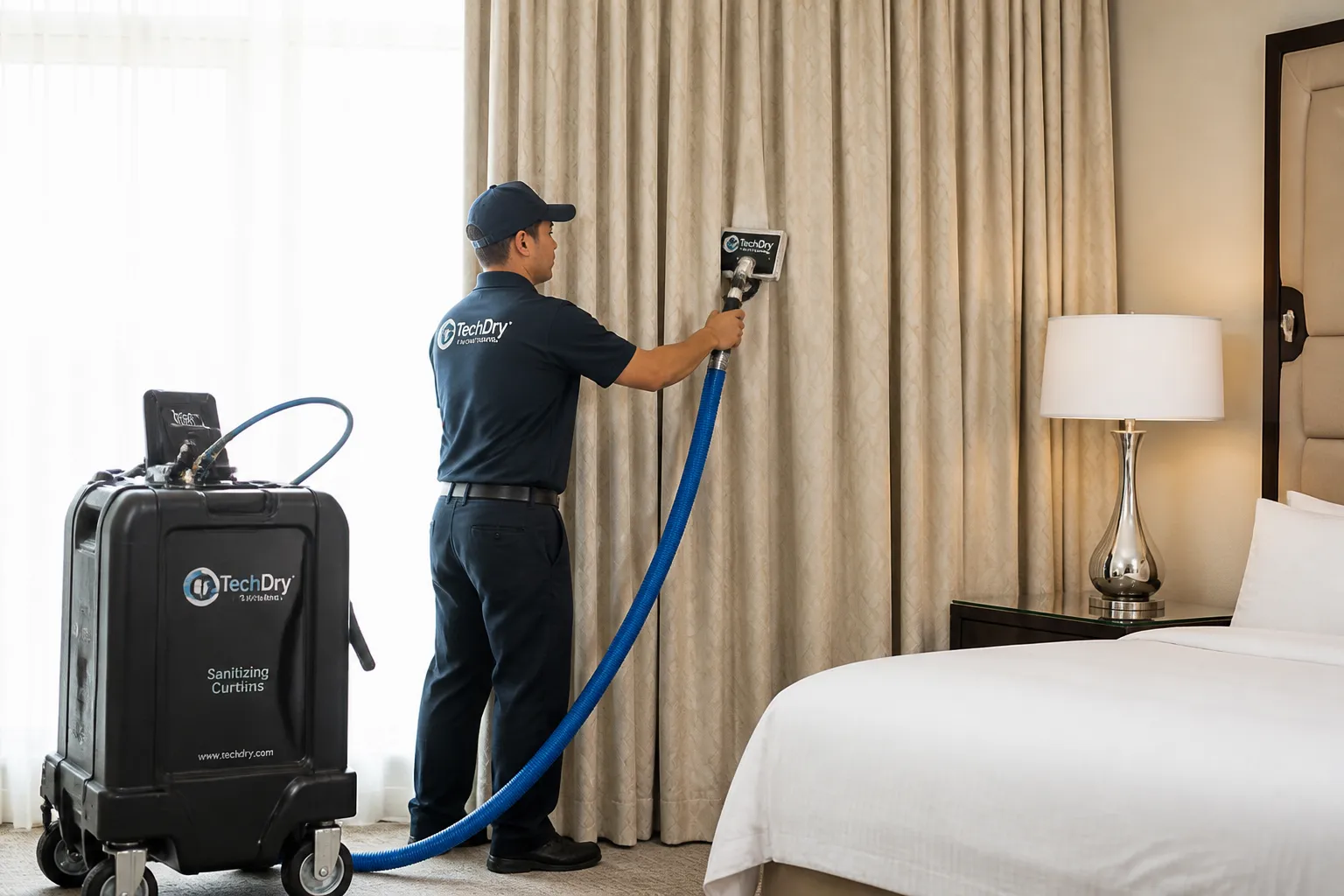
A hotel room’s curtains hang for months, often years, without ever being taken down for a deep clean. In the meantime, they build up dust, allergens and, in some cases, odours absorbed from the room, such as residual smoke in rooms not fully refreshed. It is a part of the room guests rarely touch but constantly breathe near, which is why it deserves specific attention in a property’s sanitisation plan.
This article explains how to properly sanitise a hotel’s curtains and how often.
Contents
- Why curtains deserve specific attention
- Blackout curtains: a special case
- Routine maintenance between washes
- Professional sanitising methods
- Recommended frequency
- Signs that intervention is needed
- Scheduling the work without blocking the room
Why curtains deserve specific attention
Unlike bed linen, changed at every turnover or at regular intervals, curtains stay in the same position for much longer periods, exposed to ambient dust, direct sunlight and, in some cases, smoke or kitchen odours that spread through the room. This prolonged exposure makes them a particularly significant allergen accumulator, especially for sensitive or allergic guests.
Blackout curtains: a special case
Blackout curtains, increasingly common for the sleep comfort they offer, often have a lining or multi-layer structure that tends to trap dust more heavily than a single-layer fabric. Cleaning them sometimes needs extra attention to the inner lining, which can be damaged by overly aggressive washing techniques or temperatures unsuited to the material.
Routine maintenance between washes
Between deep washes, regular dusting with a vacuum fitted with a fabric-specific attachment reduces surface dust build-up. This activity, simple but often overlooked in the daily room cleaning routine, should be included in a periodic plan separate from the standard daily turnaround.
Professional sanitising methods
Professional curtain sanitising can involve taking the curtains down from the track and washing them at a laundry facility, using techniques specific to the fabric, or treating them on-site with dry steam, which sanitises the fabric without needing to remove it. The latter is often preferable for large curtains or ones that are hard to remove, since it reduces the room’s downtime.
Recommended frequency
The ideal sanitising frequency depends on the room’s exposure (proximity to busy streets, direct sunlight) and the type of guest the property attracts. As a general guide, a thorough sanitising job once or twice a year is adequate for most rooms, with more frequent work for rooms with a history of odour or allergy complaints.
Signs that intervention is needed
A few signs indicate it is time to schedule sanitising: visible dust build-up on top of the curtains, a noticeable smell when opening them, or discolouration in the areas most exposed to sunlight. Even without obvious signs, a preventive periodic sanitising plan stops these problems from becoming noticeable to guests.
Scheduling the work without blocking the room
A well-planned sanitising job fits into the days a room is free between one check-out and the next check-in, or is scheduled during lower-occupancy periods, to avoid taking the room off sale during peak demand. On-site steam treatment is particularly useful here, since it requires less time than taking the curtains down and washing them fully.
Our room cleaning service includes scheduling periodic sanitising for room curtains and fabrics.
If you want to set up a curtain sanitising plan for your property, get in touch for an assessment.