


Multiservice cleaning company for hotels: what it covers
Published on
3 min read
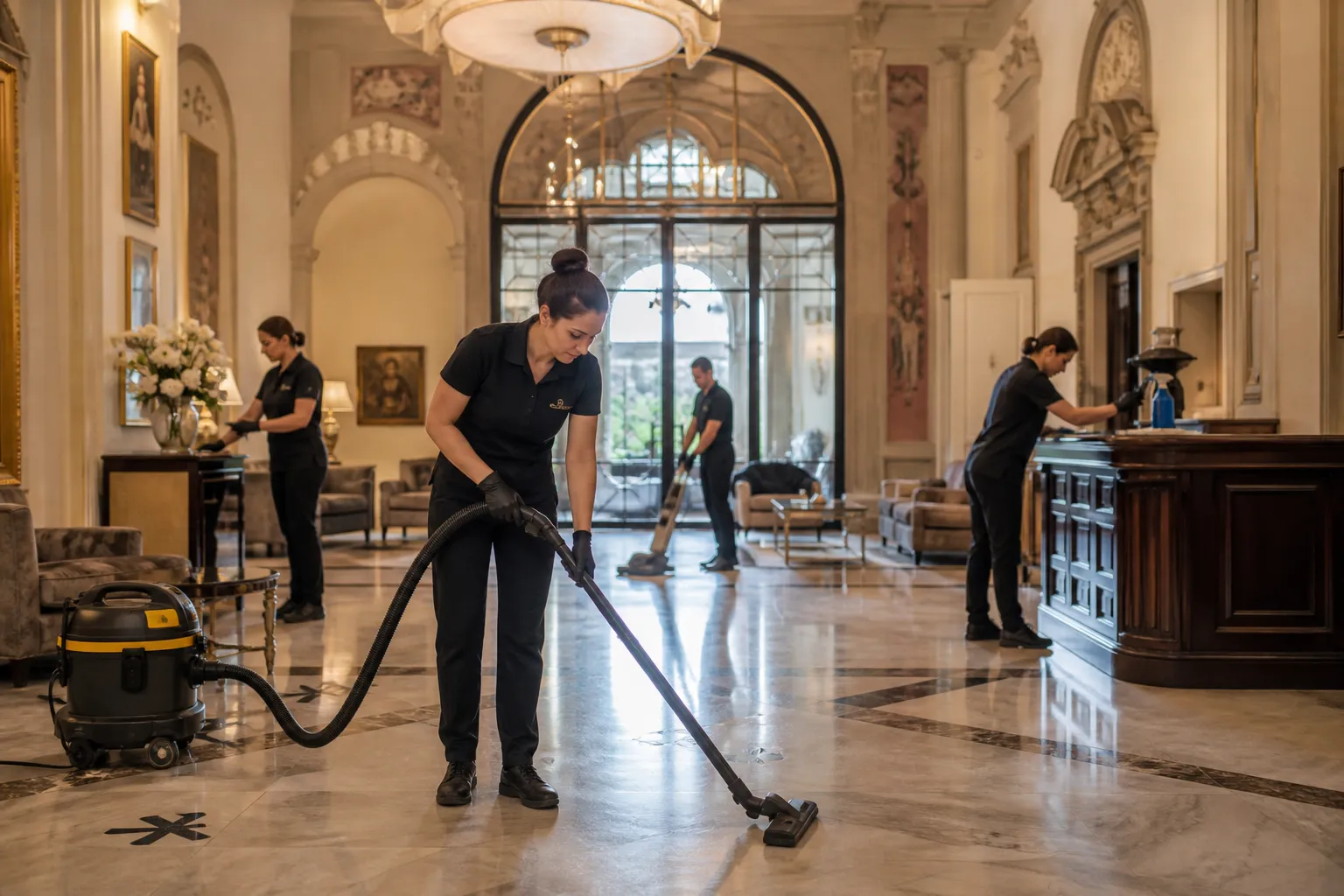
The term “multiservice” is used often in the professional cleaning industry, but it does not have a single fixed meaning: some companies use it to describe covering several areas of a property (rooms, common areas, outdoor spaces), while others include complementary services such as minor maintenance, gardening or waste management. For a hotel evaluating a supplier, understanding what a multiservice offer actually includes avoids costly misunderstandings.
This article clarifies what a multiservice cleaning company for hotels in Tuscany can, and cannot, include.
Contents
- What multiservice really means
- The core: room and common area cleaning
- The most common complementary services
- Where multiservice ends and technical maintenance begins
- The advantages of a single supplier
- The risks of too broad an offer
- How to define the scope with your supplier
What multiservice really means
In practice, a multiservice cleaning company for hotels usually covers several operational areas under a single contract: room cleaning, common area cleaning, outdoor spaces, and often ancillary services such as linen management or logistical support during events. The main advantage for the hotel is having a single point of contact and a single contract instead of coordinating separate suppliers for each area.
The core: room and common area cleaning
The core of any multiservice offer remains room and common area cleaning, which is the largest part of the contract in terms of hours worked and staff deployed. It is also the area where it is worth checking the supplier’s specific experience most carefully, since it is what guests use to form their most immediate judgement of the property.
The most common complementary services
Beyond the core, more structured multiservice companies often offer: laundry management (in-house or via a partner supplier), support with sorted waste management, minor maintenance (replacing bulbs, checking taps), outdoor and garden cleaning, and logistical support during events or seasonal changeovers. Not every company includes the same package: it is always worth checking, item by item, what falls under the standard contract and what requires a supplement.
Where multiservice ends and technical maintenance begins
A point that often causes confusion is the boundary between multiservice cleaning and genuine technical maintenance. A cleaning company can handle minor routine maintenance (a light bulb, a curtain that needs adjusting), but work on electrical, plumbing or air conditioning systems remains the responsibility of specialised technicians, often outside the multiservice supplier too. A good supplier is transparent about this boundary from the quote stage, rather than letting it surface only when a real technical issue comes up.
The advantages of a single supplier
Having a single supplier for multiple services reduces the number of contacts hotel management has to deal with day to day, simplifies invoicing and allows smoother coordination between related activities (for example, cleaning an area just repainted by the maintenance department). This model works particularly well in mid-sized properties, where it makes little sense to have dedicated in-house departments for every single support activity.
Our cleaning service for hotels and hospitality properties follows exactly this principle, with a single point of contact for the property’s different needs.
The risks of too broad an offer
A multiservice offer that is too broad can hide a risk, though: a supplier promising to do everything may lack deep specialist expertise in any of the areas covered. Before signing, it is worth asking which activities the company handles directly with its own trained staff, and which it subcontracts to third parties: in the second case, quality and accountability become harder to guarantee and to verify.
How to define the scope with your supplier
The safest way to avoid ambiguity is to put in writing, item by item, what the multiservice contract covers: which activities, at what frequency, with which staff (in-house or subcontracted), and what remains excluded or requires a supplement. A supplier who agrees to formalise this list without pushback is generally more reliable than one who prefers to stay vague.
If you want to evaluate a tailored multiservice offer for your hotel in Tuscany, get in touch for a free site visit.