


Tourist winery cleaning: what it involves
Published on
3 min read
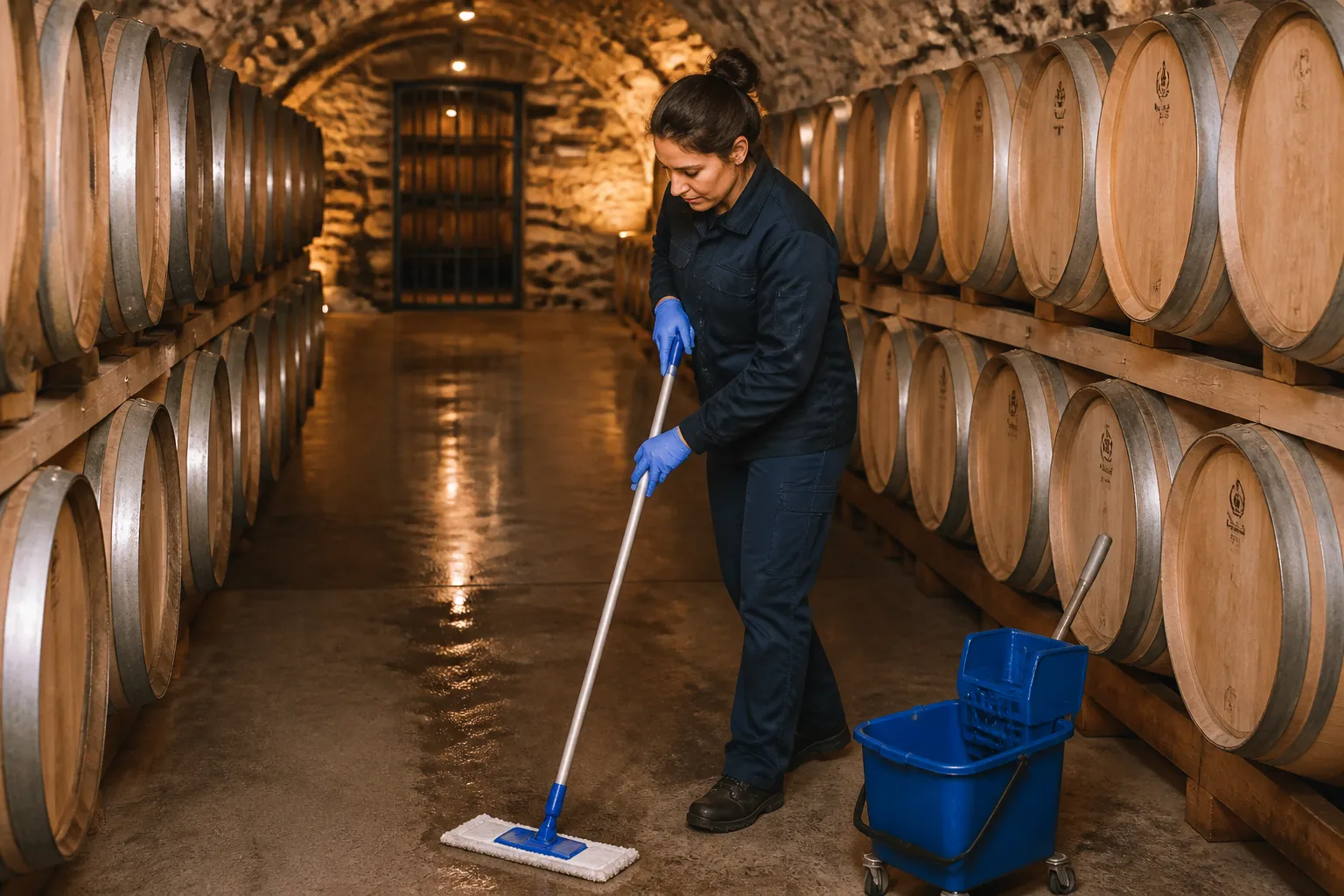
A winery that welcomes visitors for tastings and tours has a dual nature: on one hand it is a production site, with hygiene needs linked to food processing; on the other, it is, to all intents and purposes, a tourist hospitality property, with reception areas that need to convey the same level of care as a top-tier hotel or restaurant.
This article explains what cleaning involves at a tourist winery, distinguishing between the property’s two sides.
Contents
- A dual nature: production and hospitality
- Production area: food-grade standards
- Tasting room: a hotel-grade space
- Reception area and visitor route
- Public restrooms
- Managing seasonal tourist flows
- A supplier who understands both needs
A dual nature: production and hospitality
A tourist winery cannot be compared to either a simple industrial site or a pure hospitality property: it is both at once. Production areas (the winery, the barrel room, the bottling line) remain subject to the food industry’s specific health regulations, while areas open to visitors need care standards closer to hospitality’s.
Production area: food-grade standards
A winery’s production areas are subject to the same food-hygiene logic as any facility processing food products, with particular attention to barrels, vats and surfaces in contact with wine, which need specific products so as not to alter the product. This part of cleaning requires specific oenology-sector technical skills, often handled directly by the winery’s in-house staff rather than a generic outside supplier.
Tasting room: a hotel-grade space
The tasting room, by contrast, needs to be treated with the same standard of care as a restaurant dining room or an elegant hotel common area: streak-free surfaces, immaculate glassware, floors and furnishings cared for down to the smallest detail. This space is often the visitor’s first direct contact with the winery, and its condition directly affects how the product’s own quality is perceived.
Reception area and visitor route
The route that takes visitors from reception to the winery, often through outdoor spaces or transitional areas, needs to keep the same standard of care along its entire length. A route that is neglected in some stretches, even if the final tasting room is immaculate, still leaves an overall negative impression on the visitor.
Public restrooms
Restrooms for visitors need a checking and cleaning frequency comparable to a restaurant with tourist footfall, especially during peak season when organised groups follow one another throughout the day. A restroom that falls short of the standard perceived in the tasting room can spoil the visitor’s overall experience.
Managing seasonal tourist flows
Tourist wineries often experience footfall peaks linked to the tourist season and specific events (harvest, wine fairs, organised groups), which call for more intensive cleaning planning during certain times of year compared with others, when activity is mainly focused on production.
Our cleaning service can support the reception and tasting areas of tourist wineries in Tuscany.
A supplier who understands both needs
Outsourcing the cleaning of reception areas to a supplier with hospitality experience lets a winery focus its in-house resources on the production side, where specific oenology skills are required, while still maintaining high standards in the tourist areas.
If you run a winery open to tourism and want to better organise cleaning for your reception areas, get in touch for a discussion.