


Hotel upholstery maintenance: care and frequency
Published on
3 min read
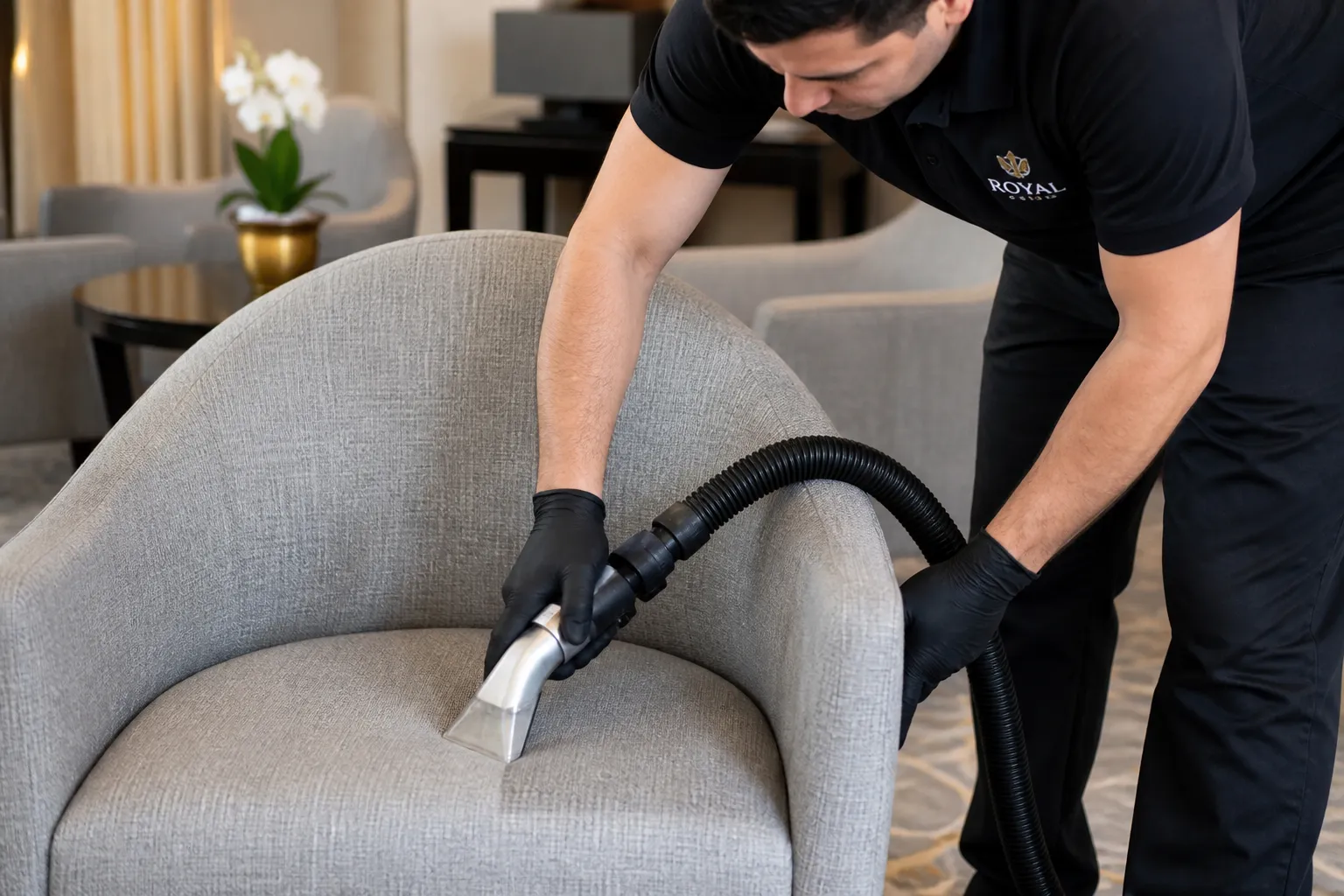
Armchairs, sofas and upholstered seating are among the fastest-ageing elements in a hotel, simply through constant contact with guests: hands, clothing, sometimes food and drink, leave traces that build up over time without regular maintenance. Unlike a floor or a hard surface, damaged fabric cannot be restored with a simple wash: it often requires replacing the entire cover.
This article explains how to set up effective upholstery maintenance in a hotel and how often to act.
Contents
- Why upholstery needs different attention
- Daily routine maintenance
- Deep cleaning: when to schedule it
- Cleaning techniques by fabric type
- Handling stains: acting immediately
- Preventive protective treatments
- When replacement makes more sense than repair
Why upholstery needs different attention
Unlike a hard surface, fabric absorbs dust, moisture and residue deep into its fibres, not just on the surface. This means a surface dusting only removes part of the actual dirt, while what is absorbed into the fibres needs specific cleaning techniques to remove without damaging the fabric itself. It is also why upholstery holds onto smells longer than other surfaces, a detail guests notice even without being able to put it into words.
Daily routine maintenance
Daily upholstery maintenance mainly consists of regular vacuuming, which removes dust and surface particles before they settle deep into the fibres. A daily visual check also helps spot fresh stains to treat immediately, before they set into the fabric. This activity should be built into the common area cleaning routine, not treated as a separate, occasional task.
Deep cleaning: when to schedule it
Beyond daily maintenance, upholstery needs periodic deep cleaning, typically every six to twelve months for high-traffic areas (lobby, breakfast room) and less often for less-used areas. This deep clean removes residue built up in the fibres over time and restores the fabric’s original appearance, as well as eliminating absorbed odours.
Cleaning techniques by fabric type
Not all fabrics clean the same way: some tolerate hot water extraction with water and detergent, others need dry cleaning to avoid streaking or shrinkage. Before starting, it is essential to check the fabric’s composition label or, if none exists, test the product on a hidden area. A mistake at this stage can cause irreversible damage, especially on valuable or particularly delicate fabrics.
Handling stains: acting immediately
Fresh stains are far easier to treat than ones that have had time to set into the fabric. For this reason, common area staff should be trained to recognise a freshly formed stain and act with immediate blotting treatment, before the liquid penetrates deeply. A delay of a few hours can make the difference between a removable stain and a permanent one.
Preventive protective treatments
A stain protection treatment applied preventively to new or freshly cleaned fabrics creates a barrier that slows the penetration of liquids and dirt into the fibres, making any subsequent stains easier and more effective to remove. We cover this in more detail in a post dedicated to stain protection for hotel fabrics, which applies to upholstery as well as room fabrics.
When replacement makes more sense than repair
When a fabric shows signs of structural wear (fraying, sagging padding, widespread discolouration) beyond simple dirt, cleaning alone is no longer enough. In these cases, replacing the cover or the item itself becomes more cost-effective than repeated maintenance, both in terms of cost and the property’s image.
Our common area cleaning service includes monitoring upholstery condition and flagging critical points early.
If you want to set up an upholstery maintenance plan for your property, get in touch for a site visit.